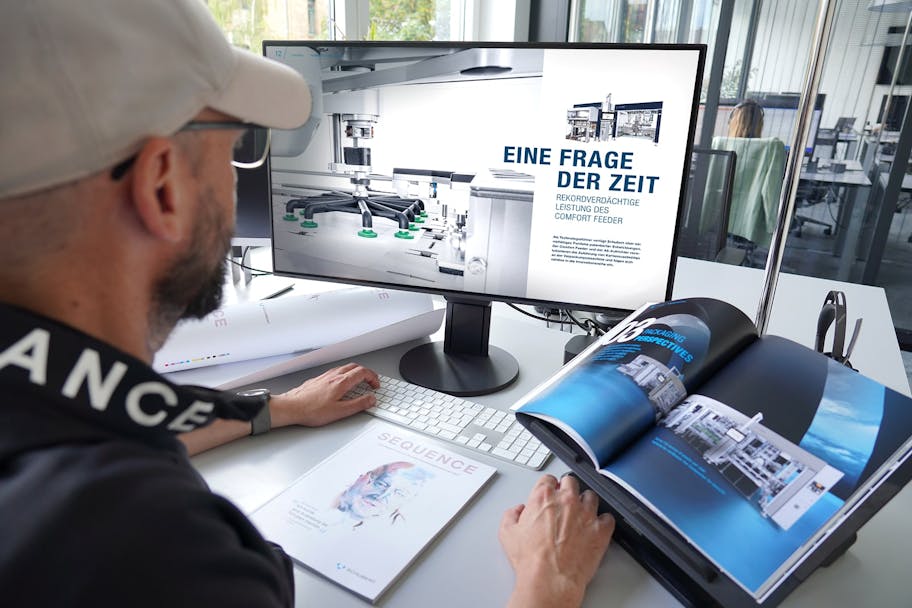
B2B corporate design agency for visible advantage

Brand systems for industrial and technology companies

A distinctive visual identity gives industrial and technology companies an advantage that pays off in the market. It makes a company’s strengths visible, ensures recognition at every touchpoint, and strengthens the trust of demanding decision-makers.

As a B2B corporate design agency, Ruess Group develops brand identities that make complex offerings tangible and strengthen competitive positioning. With the experience of a senior agency, we combine creative substance with strategic guidance and turn corporate design into an economic lever for growth and perception.

Our clients are industrial and technology companies that want to develop their brand internationally and give their market presence a distinctive form.

Guidance for the entire buying center

What effective corporate design in B2B is all about

In B2B business, purchasing decisions are rarely made by a single person. Technical, commercial, and strategic roles come together within the buying center, and each views the same brand from a different perspective. Effective corporate design gives these stakeholders orientation and conveys competence and reliability from the very first impression. This impression often helps determine whether a company makes it onto the shortlist.

Products that require explanation become more accessible through design: technical capabilities become easier to understand, and even complex relationships can be communicated convincingly. To ensure this works at every touchpoint, strong B2B corporate design combines creative quality with a robust brand strategy.

In B2B, the following aspects are particularly important:

  • Clarity: Complex products and processes become visually accessible and convincing beyond the specialist level.
  • Relevance for multiple roles: The visual identity convinces all stakeholders involved in a purchasing decision, regardless of their professional perspective.
  • Recognition at every touchpoint: Data sheets, websites, sales materials, and trade fair appearances create a consistent and memorable impression.
  • International viability: The design works across different markets while remaining distinctive.

Corporate design with this level of substance strengthens every further marketing and sales measure and gives your company a presence that stays in people’s minds.

Your contact at the corporate design agency

Are you planning to make your brand presence more distinctive and more effective? Schedule an appointment with us to discuss your project personally.


Steffen Ruess

Steffen Ruess

Managing Partner
Ruess Group

Visible contribution to market position and growth

Corporate design as an economic lever

Well-conceived corporate design is an investment that is reflected in market position. It shapes how a company is perceived and makes its value tangible for customers.

For CMOs and marketing leaders, the business impact is what matters. A distinctive visual identity creates recognition, and recognition creates preference: when decision-makers already know and can place a company, they choose it with greater confidence in the selection process. This effect grows stronger with every additional touchpoint.

Visual identity also builds trust. A consistent, high-quality presence supports the investment decision and allows a company to appear on equal footing with the market leaders in its industry. At the same time, corporate design with binding design rules increases efficiency: every campaign, every sales document, and every trade fair appearance becomes more effective from the start.

Corporate design contributes to business objectives in the following ways:

  • Differentiation: A distinctive visual identity sets the company apart from competitors and supports a premium position.
  • Recognition: Consistent design elements anchor the brand in the minds of decision-makers.
  • Trust: A high-quality presence reduces the perceived risk within the buying center.
  • Efficiency: Binding design rules reduce coordination effort and increase the impact of every measure.
  • International scaling: A robust design system carries the brand reliably into new markets.

Corporate design therefore becomes a leadership-level decision: it helps determine how a company is perceived in the market and forms an important pillar for sustainable growth. In our field of impact 03 Brand, Visibility & Experience, we combine brand management, design, and experience worlds into one coherent whole.

From self-understanding to visible presence

How corporate design and corporate identity work together

Corporate identity and corporate design are often used interchangeably, but they describe two different levels of a brand. Corporate identity is a company’s self-understanding: its values, attitude, behavior, and communication. Corporate design is the visible expression of this identity, translating it into a logo, color world, typography, and imagery.

A visual identity gains its persuasive power from this connection. That is why every Ruess Group design project begins with the foundation of the brand:

  • Brand core and brand values: the value framework on which the identity rests.
  • Positioning: the place the company occupies in the market.
  • Brand personality: the character that makes the company distinctive.

On this foundation, a corporate design is created that makes the identity precisely visible and remains effective for years. As both a corporate identity agency and a corporate design agency under one roof, Ruess Group brings these two levels together — from brand consulting and strategy to design.

In B2B marketing, this coherence carries particular weight. A consistent B2B corporate identity strengthens credibility with decision-makers who make their choices carefully and for the long term. A presence in which design and attitude fit together appears confident and meets the expectations of demanding industrial and technology customers. Especially in internationally active companies, a corporate identity that works across all countries and cultures creates the same reliable impression everywhere.

Elements that make a brand distinctive

The building blocks of effective corporate design

Modern corporate design is created digital first. Its elements need to convince on websites and in apps, on the operating interfaces of machines and systems, in digital sales and trade fair applications, and wherever printed media still have their place. Every building block contributes to recognition, and together they create a visual identity that makes a brand distinctive. The more unique these elements are, the more strongly the brand is remembered.

  • Logo and wordmark-symbol combination

    The logo is the centerpiece of corporate design. As a wordmark-symbol combination or symbol mark, it condenses a company’s self-understanding into a memorable sign. A modern logo is designed for digital use from the very beginning: it remains recognizable as an app icon, in favicon format, and on a machine display, can be animated, and works at any size.

  • Color world and typography

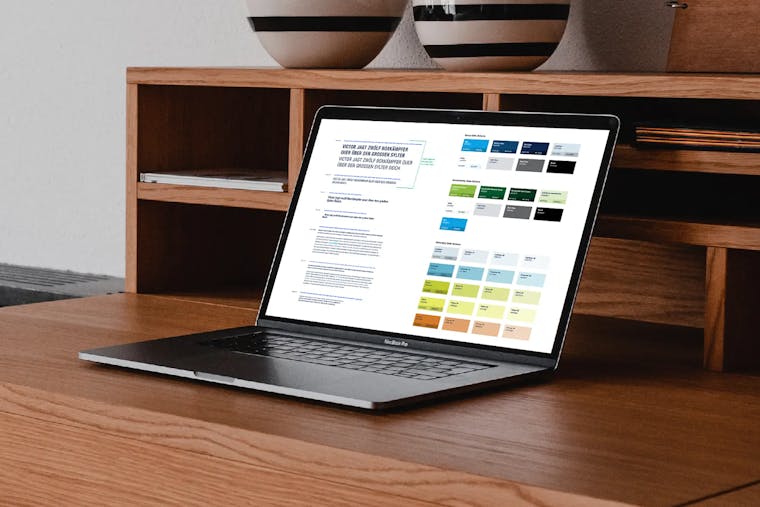
    Colors and typefaces give the brand voice and temperament. A distinctive color world ensures that a company is recognizable even before its name is read, and is optimized for screens: with sufficient contrast, accessibility, and suitability for both light and dark views. A characterful corporate typeface convinces as a web font in every resolution and gives even long technical texts strong readability.

  • Imagery, icons, and motion design

    Consistent imagery makes abstract capabilities tangible and tells the story behind the products. Icons and pictograms structure complex information and guide the eye. Motion design brings these elements to life: animations explain functions, direct attention, and make digital applications feel alive. In technical B2B, image, icon, and motion translate sophisticated processes into understandable representations.

  • Design grids and digital components

    A design grid organizes all elements and gives every application structure. From this, reusable digital components are created, such as buttons, image tiles, and page modules that adapt responsively to any device. The same principles guide the brand across website, app, and printed materials, ensuring that all applications are recognizable as part of one family.

    Together, these building blocks form a repertoire of recognizable brand elements that every digital and printed application can draw on.

Balancing guidance and creative freedom

Corporate design as a living system

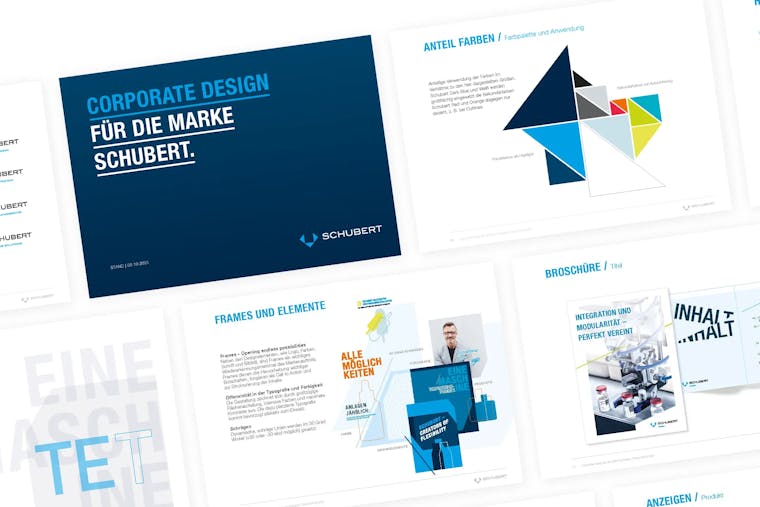
The individual building blocks are most powerful when they work together as a system. A design system connects logo, colors, typography, imagery, and components into one coherent whole and defines how they interact. This creates a brand presence that remains recognizable across all departments, markets, and applications.

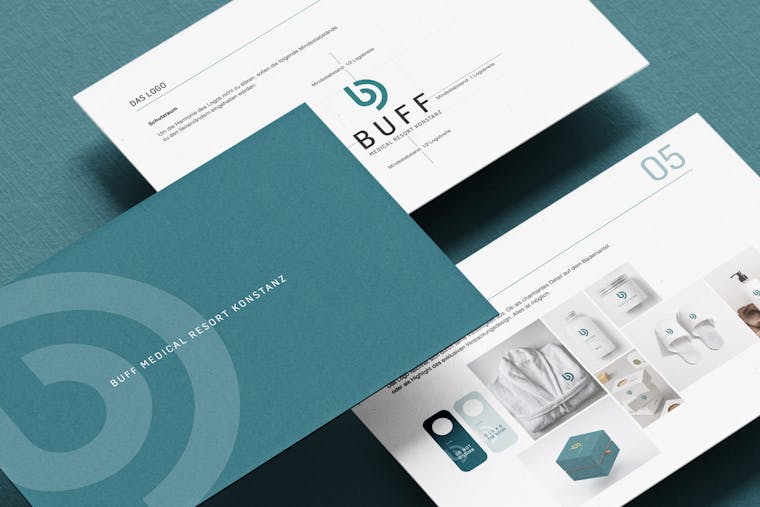
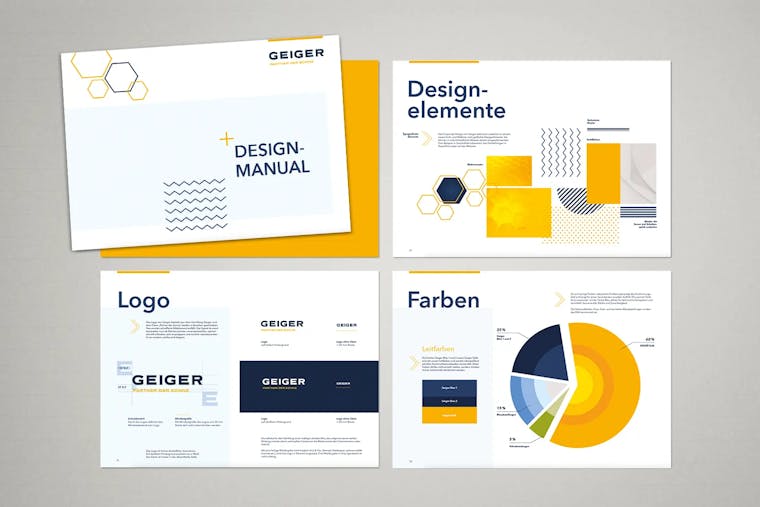
For a long time, corporate design consisted of multi-volume manuals: a fundamental corporate design manual and supplementary handbooks for each field of application. Today, Ruess Group manages brands as living systems. They provide reliable guidance while also leaving the creative freedom that committed teams need to develop strong solutions. This balance is decisive: enough structure secures recognition, while enough freedom keeps the brand flexible and contemporary.

For many clients, we also develop a brand playbook. It shows the brand in action: real applications make visible how the elements work together and how the brand appears in practice. The playbook serves as a source of inspiration for teams and turns design rules into a living working foundation.

A contemporary Ruess Group design system includes:

  • Design guidelines and a style guide that describe the foundations in a binding way.
  • Reusable digital components and templates for web, app, and sales media.
  • A brand playbook that brings the brand to life through real examples.
  • A central, always accessible platform that teams worldwide can access.

This gives marketing, sales, and international units in B2B companies a shared foundation for their work. Coordination effort decreases, and every new application fits easily into the visual identity.

Organizing brands and integrating acquisitions

Brand architecture for growing B2B portfolios
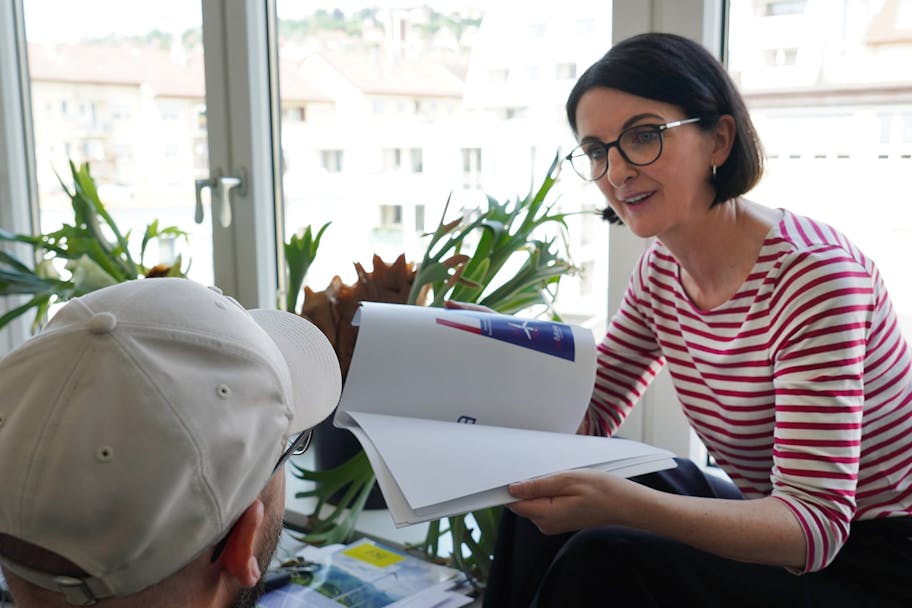
Companies that grow develop more brands over time: product brands, sub-brands, and the brands of acquired companies. Brand architecture organizes this portfolio. It defines how the corporate brand, product brands, and sub-brands relate to one another and gives naming a binding set of rules. This keeps the portfolio manageable, and each brand contributes to the whole.

Brand architecture becomes particularly important when a company grows through acquisitions. With every acquisition, a new decision must be made about the role the acquired brand will play within the group.

Practical example: integrating brands after acquisitions

For an international service group that grows through acquisitions, Ruess Group develops an approach for brand integration. At the center is a decision framework with three options for each acquired brand:

  • Integration into the corporate brand: The acquired brand is quickly transferred into the corporate brand. This creates maximum synergy and a unified market presence.
  • Co-branding or endorsement: Both brands appear together, either temporarily as a bridge or permanently. This allows trust to transfer carefully while existing customer relationships remain stable.
  • Continuation of the acquired brand: A brand with strong independence and a strong reputation is retained and keeps its closeness to the market.

Which option creates the greatest value depends on brand awareness, customer risk, regulatory requirements, and synergy potential. The decision becomes robust when corporate design, M&A, specialist departments, legal, and tax work together early — from due diligence through to integration. This turns every acquisition into a coherent part of the overall system.

One partner for the entire visual identity

Our services as a corporate design agency

As a B2B advertising agency for corporate design, Ruess Group supports the full breadth of a company’s visual identity. The following services interlock and are tailored to your specific task.

  • Brand and logo development

    Every visual identity begins with the brand. As an agency for logo development, we develop brand identity and logo based on an analysis of the company, target audience, industry, and competition, and work out the positioning and brand core. This creates a logo that carries the company for years and works across every channel.

  • Digital corporate design: website, app, and UX

    Today, a company’s digital presence is its flagship. We transfer the corporate design to websites, portals, and apps, combining design with a well-thought-out user experience. User guidance, accessibility, and performance are part of design for us, so every visit feels confident and effortless.

  • Communication media for marketing and sales

    We design the media that marketing and sales work with every day: presentations, brochures, data sheets, catalogs, and business stationery. Every application follows the design system and conveys the brand image precisely.

  • Trade fair and sales appearances

    Trade fairs remain one of the most important touchpoints in B2B. We adapt the corporate design to trade fair appearances, stand design, and digital trade fair applications, and equip sales teams with convincing materials. This makes the brand tangible in personal contact.

As an experienced corporate design agency, we connect these services into a brand presence that remains consistent in international markets.

Tailored to every company size

Corporate design for mid-sized companies and corporate groups

Corporate design is a gain for companies of every size. The requirements, however, differ significantly depending on organizational structure, international presence, and how the brand is managed in day-to-day operations. Ruess Group develops suitable solutions for both worlds.

Corporate design for mid-sized companies

Mid-sized companies and hidden champions often possess technological strength that contemporary corporate design can make even more visible. It translates established substance and market leadership into a presence that reflects the company’s true significance, while preserving the trust built over decades. What matters is a visual identity that can be managed by a small marketing team and works effortlessly in everyday use. This leaves room for growth and internationalization.

Corporate design for corporate groups

In corporate groups, many departments, product brands, and national subsidiaries work on the brand in parallel. Here, a scalable design system carries the visual identity reliably across the entire organization and ensures a unified presence in all markets. Binding rules, reusable components, and a central platform provide teams with guidance and reduce coordination effort. Corporate design thus becomes a shared foundation on which international units can work independently while remaining consistent.

In both cases, the same standard applies: corporate design reflects the company’s true strength and proves itself in day-to-day business.

Reasons for a stronger visual identity

When a corporate design relaunch makes sense

A corporate design relaunch is worthwhile when a company has evolved and its market presence can make this development more visible. Such moments are easy to recognize.

A new visual identity is particularly valuable:

  • when a strategic realignment or repositioning needs to become visible through the company’s market presence;
  • when growth and internationalization require the brand to convince in new markets;
  • when mergers and acquisitions call for a reorganization of the brand architecture;
  • when new target groups or a generational transition shape the company;
  • when a visual identity that has grown over the years needs to be brought together into one coherent system.

Often, a careful refresh is enough to preserve the existing substance while modernizing it in a targeted way. Ruess Group assesses together with you whether a full relaunch or a focused development will create the greatest value. A well-managed relaunch is an investment in the next phase of growth and brings the company’s presence up to the level of its own ambition.

A clear five-step path

Our approach to corporate design projects

At Ruess Group, corporate design is developed through a structured process. It gives the project reliability and leads to a result that holds up in the market. The five steps are tailored to the scope and ambition of your project.

  • Analysis: We examine the company, target groups, industry, and competition. This reveals the visual expectations of the market and shows where your company can stand out effectively.
  • Brand strategy: We sharpen positioning, brand core, and messages. This foundation ensures that every design decision builds on a robust strategic line.
  • Design concept: We develop the logo, color world, typography, and imagery, and test them early on in real applications. This makes it clear before the rollout how the visual identity will work in practice.
  • Design system: We transfer the design into a scalable system and a playbook. Binding rules and reusable components make the brand applicable for all teams.
  • Rollout and ongoing development: We support the introduction across all channels and international markets and prioritize the most important touchpoints. Afterwards, we continue to develop the corporate design together with your company.

Every step is documented transparently, so you can maintain an overview of the project and manage it with confidence at all times. This creates a corporate design that is solidly justified and proves itself in day-to-day business.

Substance, experience, and international reach

Why Ruess Group is the right corporate design agency

For many companies, corporate design is the entry point into a collaboration and, at the same time, a far-reaching task that often extends over many years. Among corporate design agencies, Ruess Group brings together a distinctive combination of strengths.

Senior agency with tradition: Ruess Group has been working for B2B companies since 2005. Experienced designers and strategists work on every mandate.

Sector depth in B2B: We know the markets of industrial, technology, and service companies and understand the logic of offerings that require explanation.

International reach: We are active on six continents and manage corporate designs and rollouts across many markets. In doing so, we combine global consistency with local impact.

Award-winning design with strategic guidance: Around 15 international awards stand for creative excellence. We understand corporate design as part of a larger brand system.

At Ruess Group, corporate design is part of an integrated service portfolio. As a B2B advertising agency, we support the full scope of brand communication and connect corporate design with adjacent disciplines such as employer branding. This gives companies a partner that masters both the visual identity and its effective application in the market.

Your contact at the corporate identity agency

Ruess Group supports your project with strategy, design, and international experience. Schedule an appointment — we look forward to speaking with you.

Steffen Ruess

Steffen Ruess

Managing Partner
Ruess Group

FAQs

Frequently Asked Questions
about the corporate design agency

  • It develops a company’s visual identity and brings logo, color world, typography, and imagery together into a design system. In B2B, it makes complex offerings understandable and recognizable across all channels.

  • The costs depend on scope and complexity: the number of applications, markets, and languages, as well as the strategic depth. For a robust proposal, we review your specific task together.

  • Corporate identity is a company’s self-understanding, including its values, behavior, and communication. Corporate design is its visible expression. As both a corporate identity agency and a corporate design agency, Ruess Group develops both levels from one source.

  • A B2B corporate design agency understands the specific characteristics of industrial, technology, and service markets: offerings that require explanation, long decision-making processes, and buying centers with multiple roles. It brings the same understanding to B2B corporate identity.

  • Yes. As a B2B corporate design agency, Ruess Group is active on six continents and introduces corporate designs in many markets. A scalable design system ensures global consistency while allowing room for local requirements.

  • In five steps: analysis, brand strategy, design concept, design system, and rollout. This process makes the project transparent and leads to a visual identity that proves itself in day-to-day business.

  • Yes. As a B2B advertising agency, Ruess Group develops corporate design as part of the overall brand communication and supports it both strategically and creatively.